

Getting started:
Supply chains
Overview
Supply chains are an important part of turning your creative ideas into real products that people can buy. They include all the steps: from finding materials, making the product, storing it, and getting it out to buyers. There are different ways to set up a supply chain depending on your resources, who you work with, and where you want to sell. This page explains the common models and terms to help you choose the right approach for your art centre.
A supply chain is the process of making and delivering a product from start to finish. It includes all the steps – sourcing raw materials, manufacturing, transporting, storing and finally selling to customers.
There are four main stages in this process:
- product development and design
- manufacturing
- distribution
- retail
Different supply chain models suit different needs and have different risks and rewards. Here are three types of supply chain models:
The simple model
Artists create works at an art centre and sell them through:
Internal channels such as a shop or gallery at the art centre, or at art fairs and markets.
External channels such as exhibitions at commercial galleries.
The complex model
This model involves more stakeholders and partnerships. It includes:
Developing new products and deciding how to produce them
Partnering with manufacturers to create products
Using brands, wholesalers, or logistics providers for warehousing and distribution
It’s important to decide how you’ll make and sell your products. One useful approach is to conduct a risk and impact assessment.
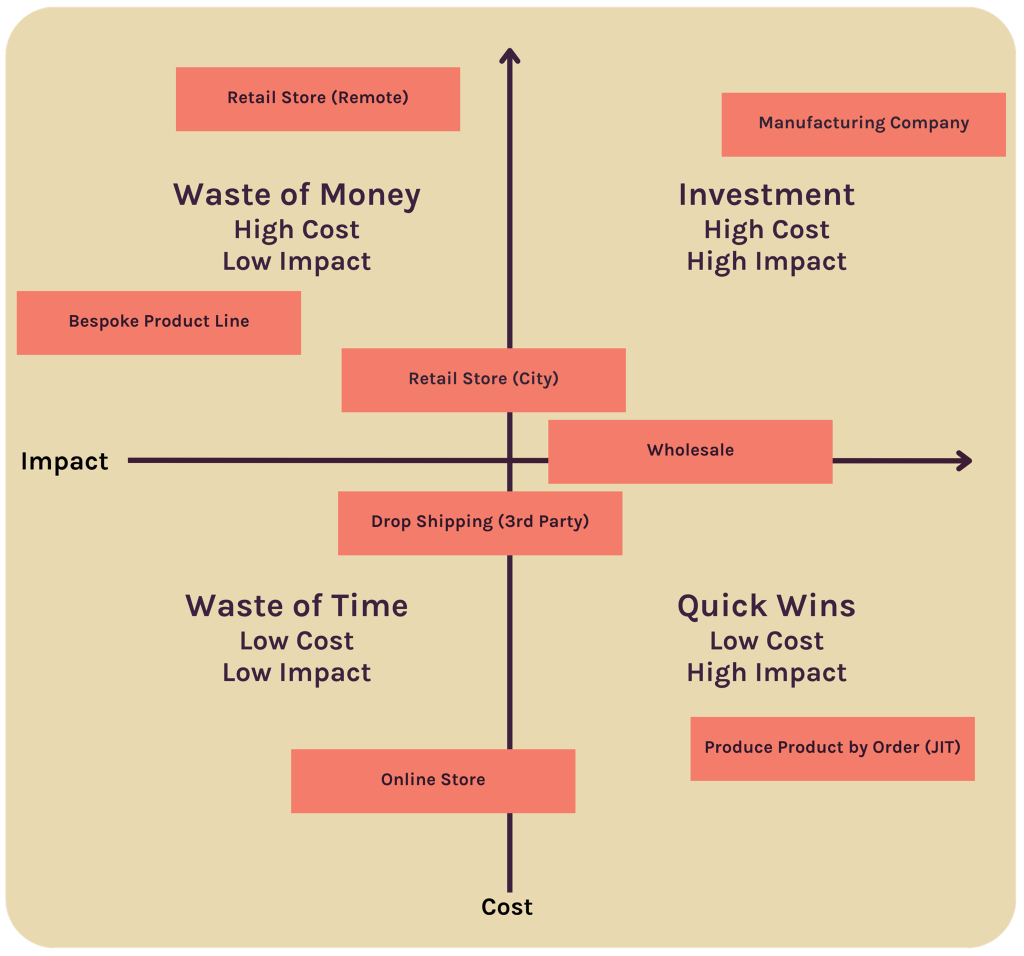
The brand collaboration model
In this model, the art centre or artist collaborates with a brand through a licensing agreement. The brand uses the artist’s designs to produce products and sells them through its own distribution network. While the brand owns the produced inventory, records can link the design back to the artist.
Each model requires input from the artist and carries different levels of risk and resources.
Things to consider
Different supply chain models suit different businesses. When you are evaluating suppliers and a supply chain model that’s most suitable, several factors should be considered. These include physical aspects, such as location, storage, and sales facilities, as well as capacity, which includes technological and human resources.
Also important is the design process, which considers:
- The story of the art centre and its members, including their history, values and experiences
- The types of products the art centre offers, including their category, production methods and quality
- The specific requirements of both the art centre and its artists
Lastly, the customer plays a vital role in shaping supply chain decisions, influencing choices around production, distribution, and sustainability goals.

Commonly used terms in a supply chain
Pick and pack
Pick and pack is a process in warehouses and distribution centres where workers take products from storage (picking) and package them for shipping (packing). It’s a key part of order fulfillment.
For example, if a distributor is preparing an online order, they will select the right items from shelves (picking), then box them up, add labels and prepare them for shipping (packing). It helps ensure customers get the right products quickly and efficiently.
Deliverables
Deliverables are the specific items, products, or results that need to be completed or delivered. They could be physical goods, reports, services, or anything promised as part of the process.
Each step in the supply chain has its own deliverables. For example, factories need to deliver assembled components, warehouses need to deliver stocked inventory, and retailers need to deliver the final product to customers.
Door to door
Door to door refers to a delivery method where a product is transported directly from the supplier or manufacturer straight to the customer, without stopping at warehouses or distribution centres in between. It’s often used for fast, efficient, and personalised deliveries, especially for high-value items or international shipping.
Door to port
Door to port refers to a delivery method where goods are transported from the supplier or manufacturer directly to a port, rather than going all the way to the customer’s doorstep.
For example, if a company in China orders products from a supplier in Australia, door to port means the supplier arranges the transport from their warehouse to the port in Australia, where the goods are then loaded onto a ship or plane for international shipping. From there, another logistics provider takes over to move the goods from the port to their final destination.
It’s commonly used in international trade, where businesses handle their own transportation from the port onward.
Minimum order quantity
In the supply chain context, minimum order quantity (MOQ) refers to the smallest amount of a product that a supplier or manufacturer is willing to sell at one time. Businesses set MOQs to ensure their production and sales remain cost-effective.
MOQs help suppliers manage costs, optimise manufacturing, and ensure bulk buying benefits. If a buyer can’t meet the MOQ, they might need to negotiate, find another supplier, or pay a higher price per unit.
Packaging
In a supply chain, packaging refers to the materials and containers used to protect, store, and transport products throughout the supply chain. It ensures goods stay in good condition and are easy to handle from manufacturing to delivery.
There are three main types of packaging in a supply chain:
Primary packaging: This is the packaging the customer interacts with directly, like a box for a candle.
Secondary packaging: This groups multiple units together for easier handling, like a shrink-wrapped pack of bottled water.
Tertiary packaging: This is used for bulk transport, like pallets, crates, or large cardboard boxes that protect products during shipping.
Packaging helps with product protection, branding, storage efficiency and logistics to make sure items reach customers safely and in good condition.