

Making products:
Working with manufacturers
Building strong relationships with manufacturers is an important part of developing quality products. This section explains how to choose the right suppliers, manage contracts, and keep communication clear and fair. It covers everything from getting quotes and signing agreements to making sure suppliers meet their responsibilities. A good relationship with a manufacturer helps ensure the final product is delivered on time, on budget, and to a high standard.
Supplier Relationship Management
Supplier relationship management (SRM) involves identifying suppliers, understanding their capabilities and limitations, and working collaboratively to build mutually beneficial long-term relationships.
Tips for selecting and managing suppliers
The following sections can be useful for evaluating and managing suppliers.
Obtaining Quotes
To obtain a quote from a supplier, a costing sheet is required. The costing sheet tells the supplier everything they need to know to understand what you are asking them to provide so that they can provide accurate pricing.
It includes:
- Submission deadline, submission process, and contact person
- Product mock-up and specifications (materials, sizes, volumes, packaging requirements, image quality guidelines, etc)
- Timing for products to be delivered
- Delivery details for finished products and insurance obligations
- Standard contract or Purchase Order terms and conditions
There are many other factors which influence supplier selection aside from pricing. These include:
- Trust – how well a supplier is known to the art centre (firsthand or secondhand)
- Past performance
- Location of manufacture (in Australia or offshore)
- Material sourcing (in Australia or offshore)
- Ethical supply chain practices (e.g. modern slavery controls, child labour checks)
Rating a supplier
The higher a supplier rates in terms of pricing and other factors, the more likely they are to be selected. A simple points-based rating system called a supplier analysis is sometimes used by art centres to provide clarity in the evaluation process.
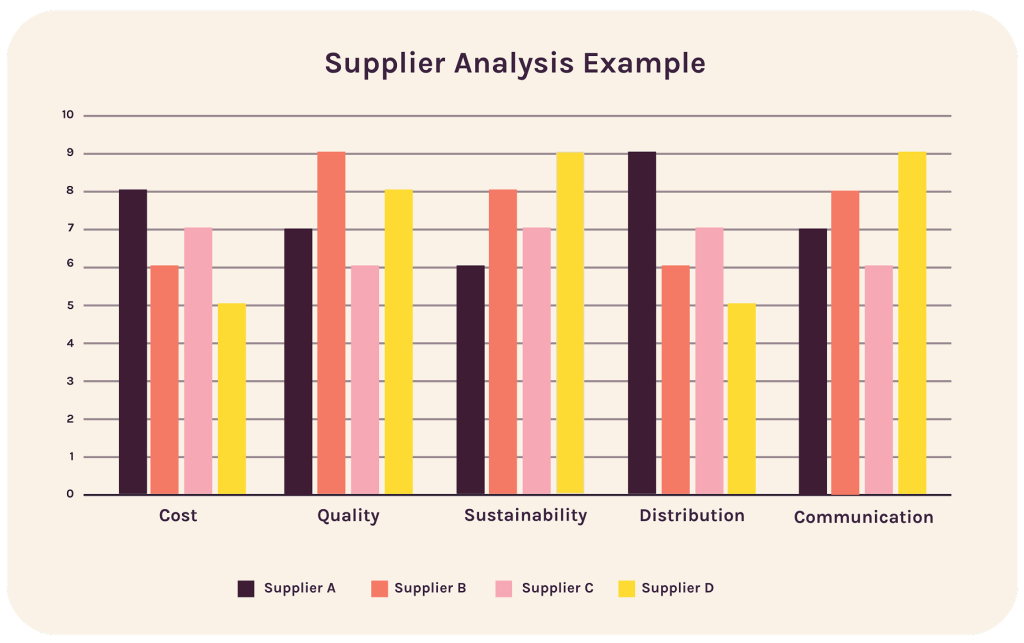
Once a supplier has been selected, there is typically a negotiation process to establish pricing, contract terms, and conditions. To build confidence in their suitability, you may be able to ask them to provide additional information such as project histories, references, insurance details, and accreditations. However, if the supplier has already provided a formal quote, there may be limitations to negotiate pricing or terms.
Purchase Order and Contract
Once a purchase order (PO) is agreed upon or a contract is signed, it becomes the official document that guides how the supplier is managed. It should clearly outline conditions and expectations to make sure the supplier follows the agreed terms.
Some POs will need to be broken down in specific ways, so be sure to speak with your manufacturer if they have any requirements. For example, if you’re making clothing, you will need to provide a size break with the number of units per size. Some manufacturers have minimum quantities on each size as well as a total order minimum.
Contract Management
Contract management helps to ensure that suppliers deliver what they have promised, that pricing remains competitive, and that risks are identified and managed appropriately. Supplier Selection and Management and Risk Management address how this is done.
The person responsible for managing the supplier should ideally have contract management experience. If this is not the case, they should have access to someone who does. It is also recommended that anyone fulfilling a contract management role receive training to ensure they have the skills to do so.
Performance Management
Managing supplier performance ensures that they meet expectations for service and quality. This process is guided by the contract and should cover things such as:
- Contacts: Clearly define the supplier’s contact person and the art centre’s contact person
- Reporting requirements: Set expectations for reporting frequency (weekly, monthly) and details to be included
- Meeting obligations: Outline how often meetings should occur, what topics need to be covered, and whether they will be online or in person
- Quality standards: Specify inspection responsibilities, testing plans, and manufacturer data reports to ensure product quality
- Delivery incentives and penalties: Establish rewards for early delivery and penalties for delays to encourage timely performance
- Managing changes: Define a process for handling variations to orders or agreements
- Dispute resolution: Include a clear process for resolving disagreements efficiently
- Security measures: Outline financial security requirements, such as payment terms
Once the contract has been completed, a supplier performance review should be conducted for future reference. Any lessons learned during the supplier management process should be recorded so future projects run smoothly. Remember you are the client and should be escalating and communicating any issues that come up.